At 3 a.m., with everyone asleep and every screen dark, your house is still drawing power. The question is how much.
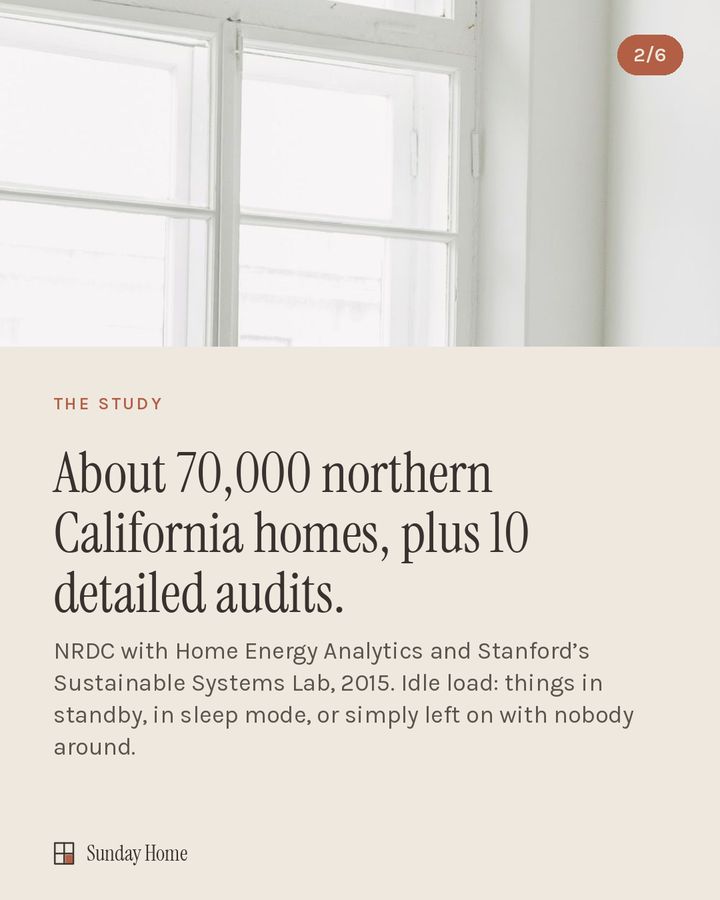
In 2015, the Natural Resources Defense Council, working with Home Energy Analytics and Stanford’s Sustainable Systems Lab, published a report called Home Idle Load. It drew on hourly smart meter data from about 70,000 northern California homes, a second set of 2,750 Bay Area homes, and detailed in-person audits of 10 houses.
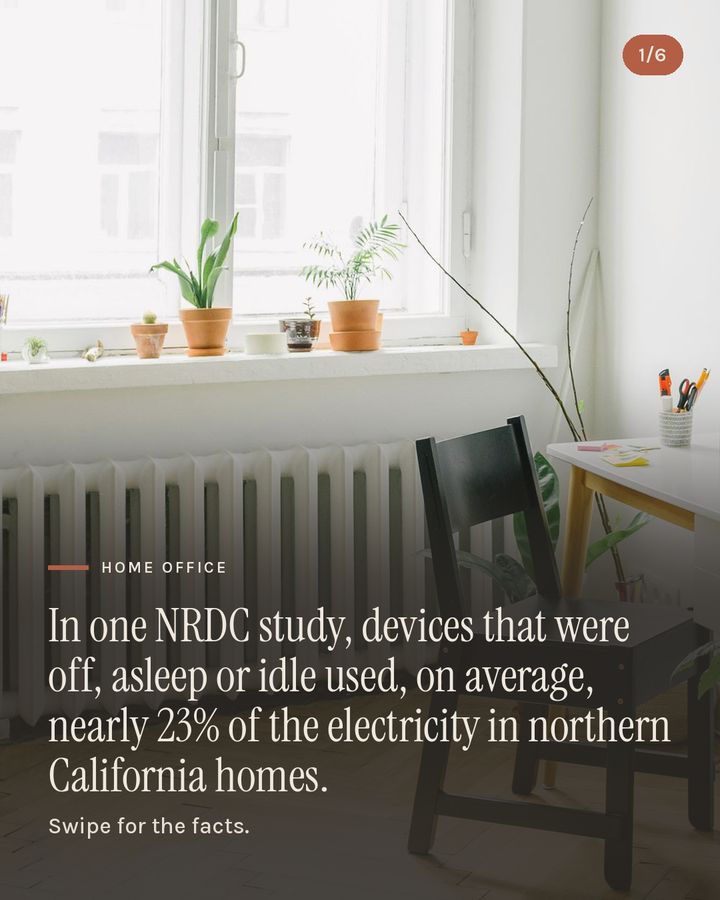
The headline finding: “always-on” use by devices that weren’t actively doing anything averaged nearly 23 percent of household electricity in those northern California homes. That includes things in standby, things in sleep mode ready to wake up fast, and things simply left on with nobody around.
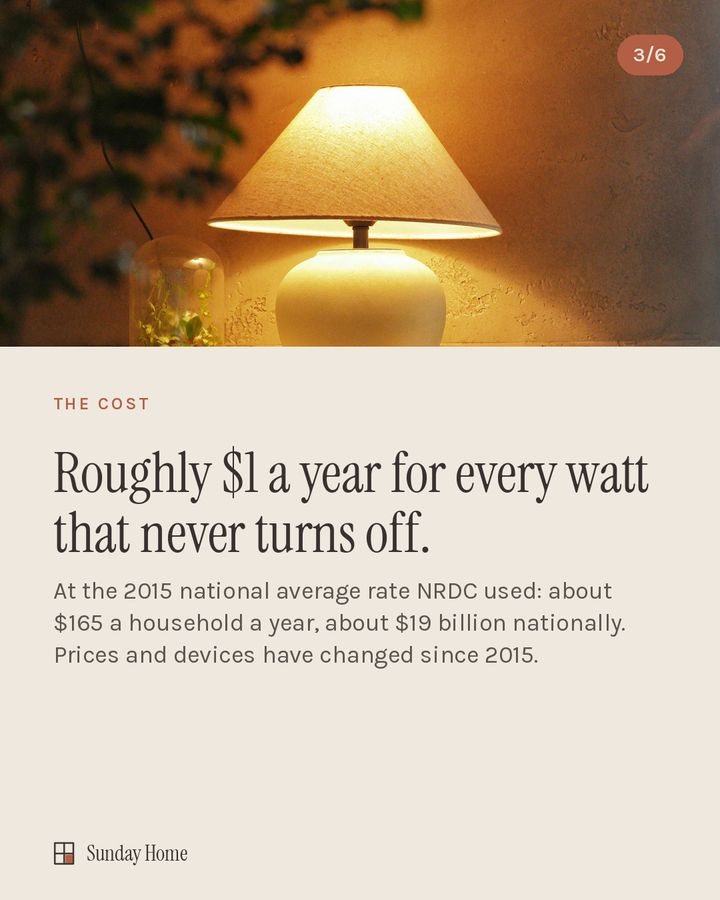
What does that cost? At the 2015 national average electricity rate NRDC used, it worked out to about $165 a household per year, or roughly $1 a year for every watt that never turns off. NRDC scaled that up to about $19 billion nationally.
Why so much? One reason, the report says, is that appliances went digital. Washers, dryers and fridges that used to be purely mechanical now have displays, electronic controls and, increasingly, internet connections.
The audits made it concrete. The 10 homes averaged 65 electrical devices each, and 43 of them drew at least 1 watt while the house was idle. Across all 10 homes, 350 small devices each drawing 12 watts or less added up to 43 percent of the total idle load. Two more examples from the report’s tips:
- A TV “quick start” setting can use as much as 37 watts around the clock in some models.
- Old second fridges in garages and basements can cost residents more than $100 a year.
Two limits. The data came from northern California, and NRDC notes the share may be lower in regions that use more electricity overall. And both prices and devices have changed since 2015.
Sunday Home
Try this at home
Tonight’s idle hunt (no tools needed):
- Feel the chargers. NRDC flags power adapters that stay plugged in all the time and feel warm to the touch, whether or not anything is attached.
- Unplug what you rarely use, like the TV in the guest room.
- Check the TV settings for a “quick start” or “instant on” mode, and turn it off if you don’t need it.
- Set the computer to sleep after 30 minutes or less of inactivity, as NRDC suggests.
Leave the fridge, medical equipment, alarms and anything hardwired alone. And if your utility offers hourly usage data online, look at the lowest hour of the night: that’s a rough picture of your home’s idle load.
What’s the one gadget in your house that’s never really off?
The carousel — scroll sideways
Sources
Everything above is checked against these. Open any of them.
- NRDC Issue Paper, *Home Idle Load: Devices Wasting Huge Amounts of Electricity When Not in Active Use*, May 2015 (IP:15-03-A), with Home Energy Analytics and Stanford Sustainable Systems Labhttps://www.nrdc.org/sites/default/files/home-idle-load-IP.pdf
- Secondary coverage (for context only, not relied on): Green Building Advisor, “Always-On Electronics and Appliances Waste Billions”https://www.greenbuildingadvisor.com/article/always-on-electronics-and-appliances-waste-billions