“Plants purify the air” is a line you hear constantly in home decor. A pair of Drexel University engineers went back to the research behind it and did the math.
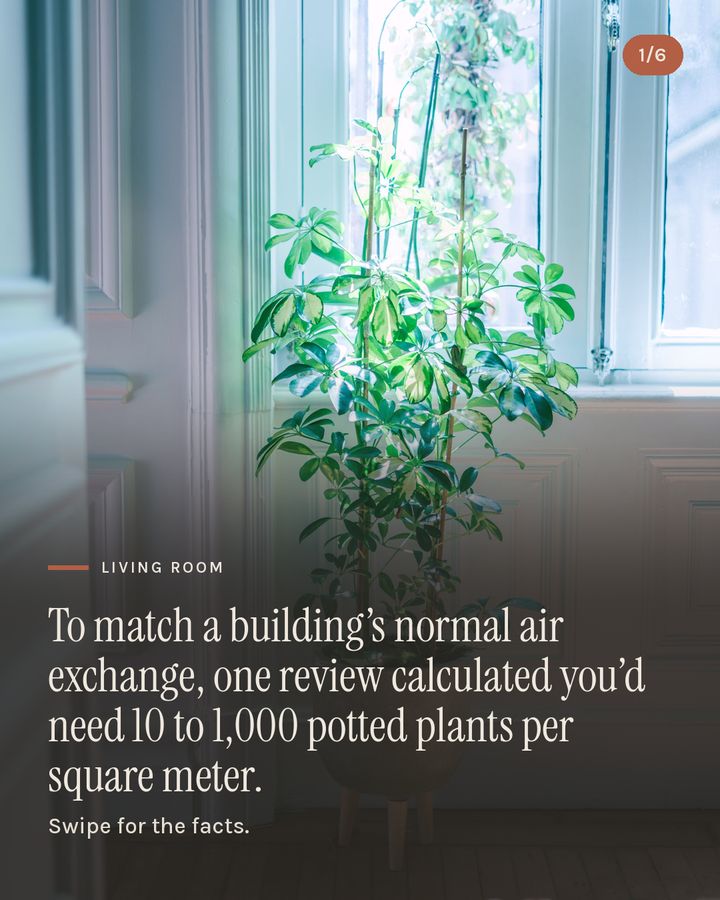
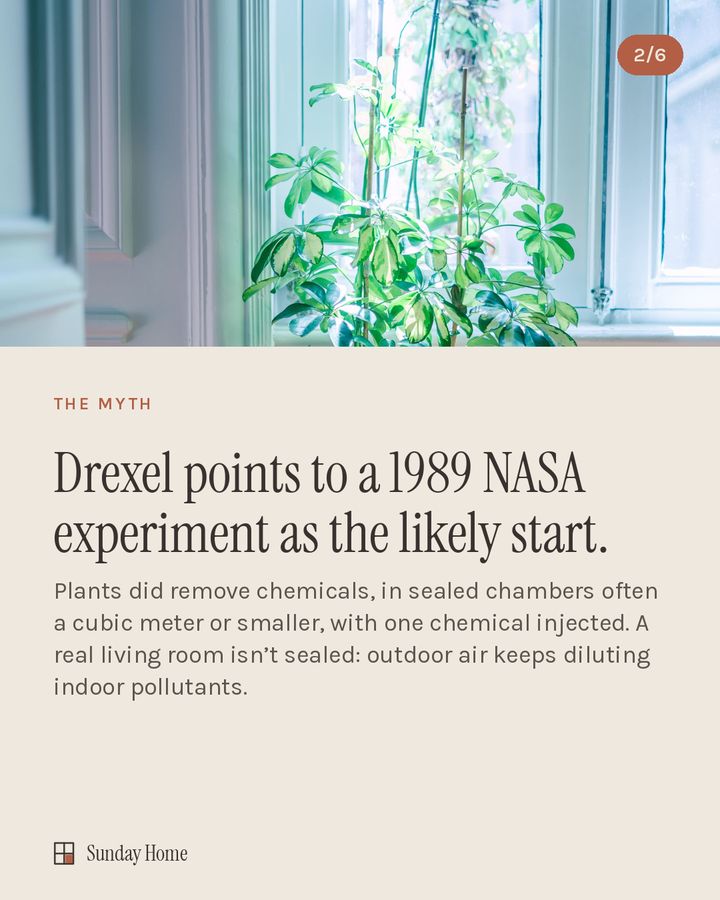
Drexel points to a high-profile 1989 NASA experiment, run while the agency was looking for ways to clean the air on space stations, as the likely start of the idea. Plants did remove chemicals in those tests. The catch, according to Drexel, is where the tests happened. In the typical study, as the researchers describe it, a potted plant sat in a sealed chamber, often a cubic meter or smaller, a single chemical was injected, and its decline was tracked over hours or days. A real living room isn’t sealed. Outdoor air is constantly leaking and blowing in, and that exchange dilutes indoor pollutants on its own.
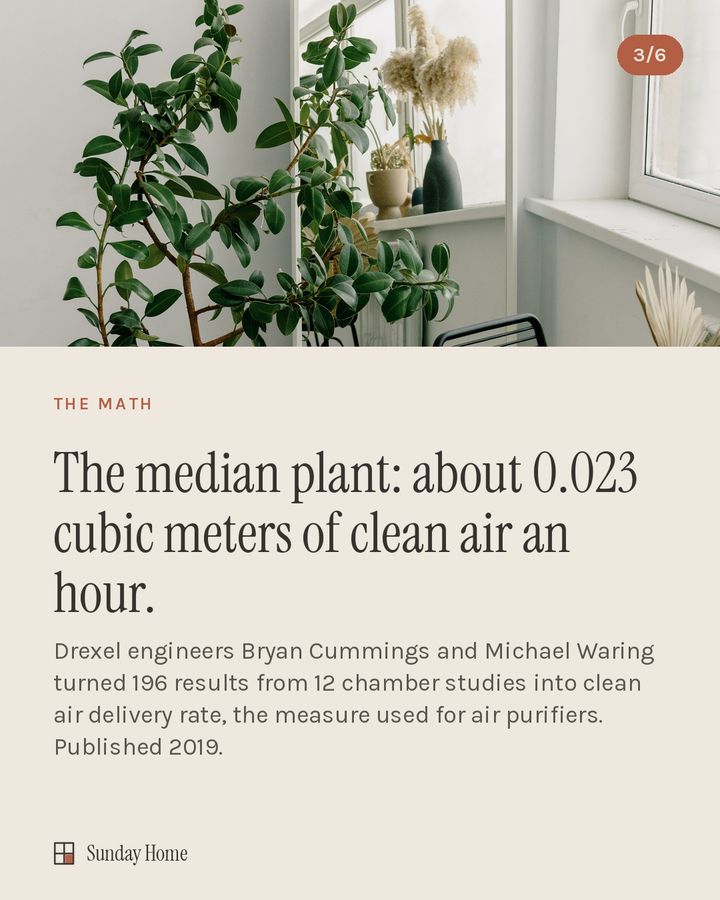
Bryan Cummings and Michael Waring reviewed 12 published chamber studies spanning about 30 years and translated 196 experimental results into a metric called clean air delivery rate, the same measure used to rate air purifiers. Their paper appeared in the Journal of Exposure Science and Environmental Epidemiology in November 2019.
The results varied enormously, but the median single plant, they found, delivered about 0.023 cubic meters of clean air per hour. To match the air exchange that typical buildings already get from outdoor air, you’d need somewhere between 10 and 1,000 plants per square meter of floor space.
“Plants are great, but they don’t actually clean indoor air quickly enough to have an effect on the air quality of your home or office environment,” Waring said in Drexel’s announcement.
Two notes on the numbers. Drexel’s news release gives the range as 100 to 1,000 plants; the paper itself says 10 to 1,000, and we’re using the paper. And this was a calculation built on chamber experiments, focused on volatile organic compounds, not a test in real homes. The authors suggest future research look at other things plants may offer, including well-being and productivity, rather than their ability to passively clean air.
Sunday Home
Try this at home
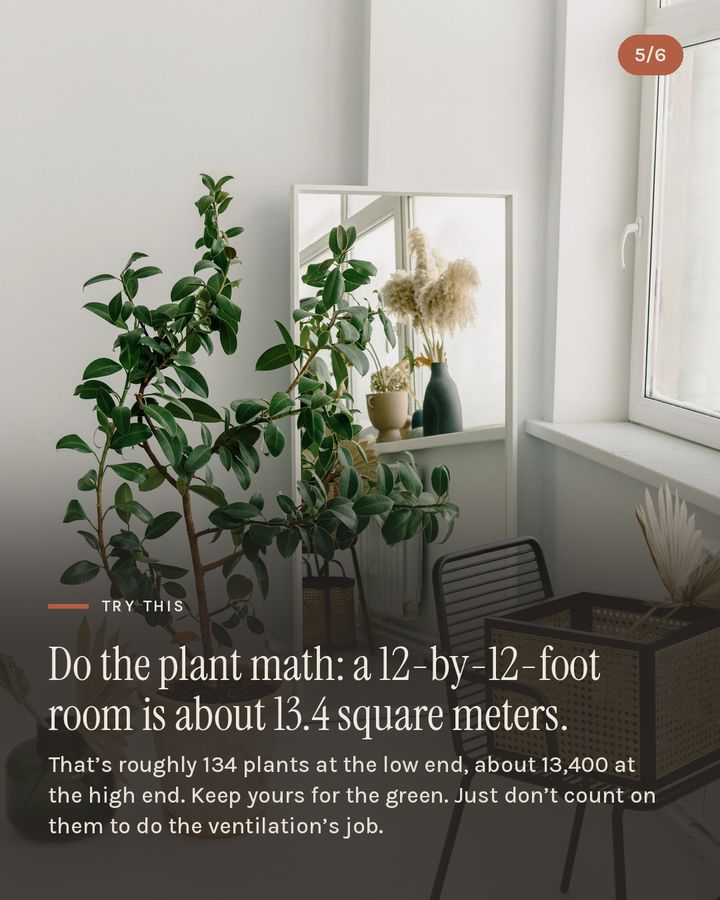
Do the plant math for one room. Measure the floor. A 12-by-12-foot bedroom is about 13.4 square meters.
- At the low end of the range (10 per square meter), that’s roughly 134 plants.
- At the high end (1,000), about 13,400.
Keep your plants for the green, the texture and the pleasure of watering them. Just don’t count on them to do the ventilation’s job.
How many plants live in your home right now? (No judgment. We counted ours too.)
The carousel — scroll sideways
Sources
Everything above is checked against these. Open any of them.
- Cummings B.E. & Waring M.S., “Potted plants do not improve indoor air quality: a review and analysis of reported VOC removal efficiencies,” *Journal of Exposure Science & Environmental Epidemiology*, published November 6, 2019 (12 studies, 196 results, CADR, median 0.023 m³/h, 10–1000 plants/m², ~1 h⁻¹ air exchange; no conflict of interest declared)https://www.nature.com/articles/s41370-019-0175-9
- Drexel University news release, “Study: Actually, Potted Plants Don’t Improve Air Quality,” November 2019 (1989 NASA experiment; sealed chamber; dozen studies over 30 years; Waring quote; “between 100 and 1,000 plants per square meter”)https://drexel.edu/news/archive/2019/november/potted-plants-do-not-improve-air-quality
Next story
 Home Office