Next time the laundry pile feels endless, consider what it used to involve.
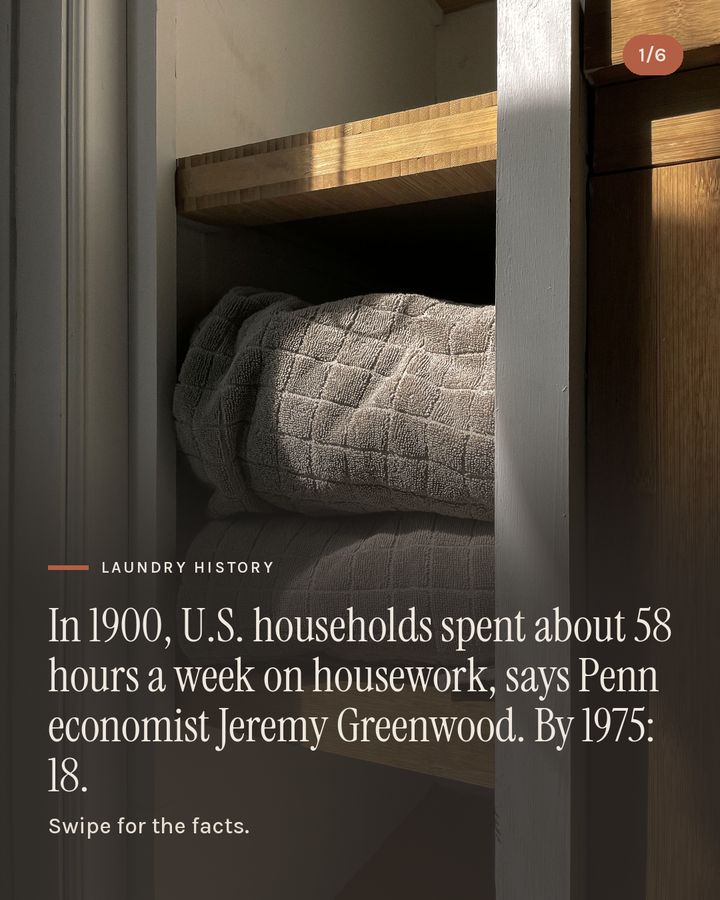
In his 2019 book Evolving Households, University of Pennsylvania economist Jeremy Greenwood tallies how technology reshaped home life. An excerpt published by Penn Today puts the average household’s housework, including cooking, laundry and cleaning, at 58 hours a week in 1900. By 1975, the figure had fallen to 18.
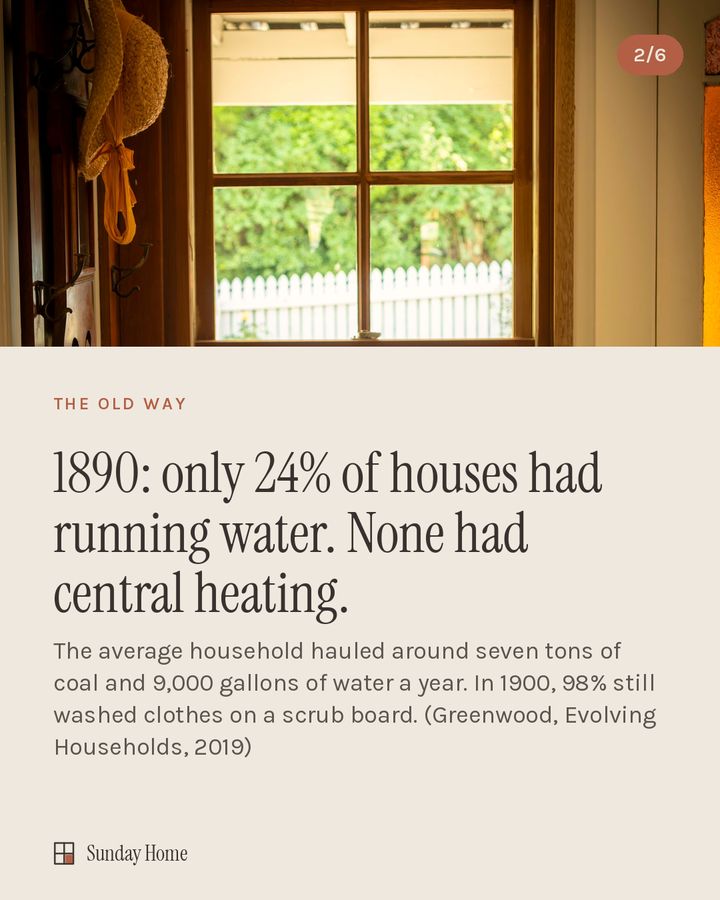
Laundry, in Greenwood’s words, was a major operation. In 1890, Greenwood writes, only 24 percent of houses had running water, and none had central heating. The average household hauled around seven tons of coal and 9,000 gallons of water a year. Mechanical washing machines existed as early as 1869, but they didn’t really catch on until the electric motor. As late as 1900, 98 percent of households still washed clothes on a scrub board.
Picture washday: haul the water in, get the stove going with wood or coal to warm it, scrub, rinse, twist the clothes dry by hand or feed them through a crank wringer, hang it all up, and finish with heavy flatirons that went back on the stove again and again.
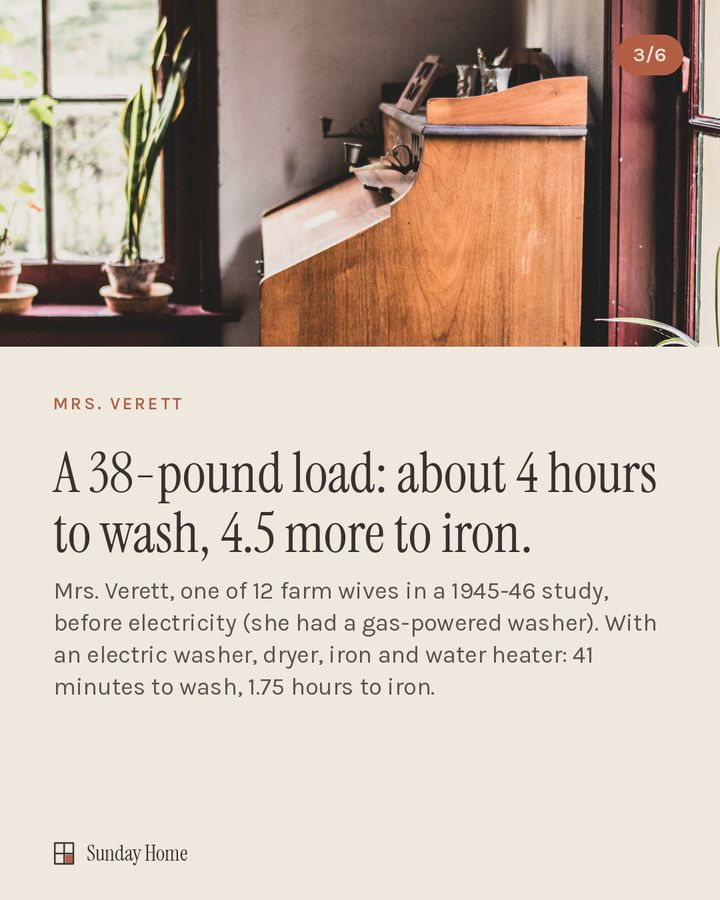
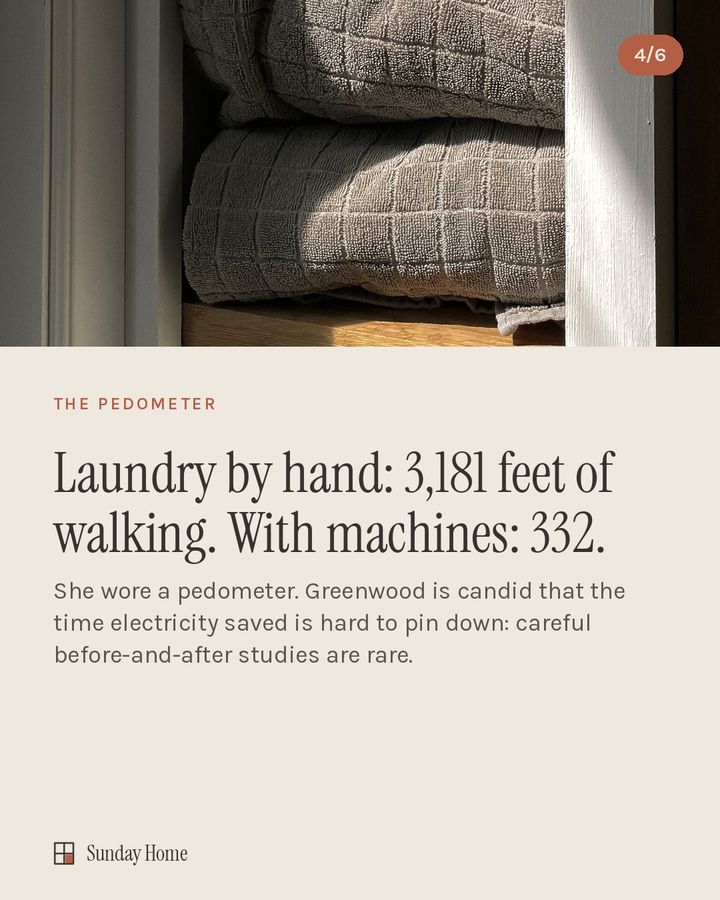
How much time did electricity actually save? Greenwood is candid that it’s hard to pin down, because careful before-and-after studies are rare. He points to one from 1945 and 1946 that followed 12 farm wives, and describes one of them, a Mrs. Verett, in detail. Before electricity (she used a gas-powered washing machine, not a scrub board), a 38-pound load took her about four hours to wash and four and a half more to iron. With an electric washer, dryer, iron and a water heater, the same kind of load took 41 minutes to wash and an hour and three quarters to iron. She also wore a pedometer: doing the laundry the old way meant walking 3,181 feet. With the machines, 332.
Greenwood connects the time freed up at home with a larger shift. In 1900, 5 percent of married women worked outside the home; by 2000, 61 percent did. He’s careful to say other forces mattered too, including wages that rose about fourfold over the century.
Sunday Home
Try this at home
Time your laundry once. This week, start a timer when you pick up the hamper and stop it when the last shirt is folded or hung. Write the number down.
Then compare it with Mrs. Verett’s eight and a half hours of washing and ironing before electricity, and let yourself feel briefly very modern.
What household chore would you most like to see through a 1900 lens: laundry, cooking or cleaning?
The carousel — scroll sideways
Sources
Everything above is checked against these. Open any of them.
- Penn Today, “How the appliance boom moved more women into the workforce” — edited excerpt from Jeremy Greenwood, *Evolving Households: The Imprint of Technology on Life* (MIT Press, January 2019)https://penntoday.upenn.edu/news/how-appliance-boom-moved-more-women-workforce
Next story
 Bathroom