
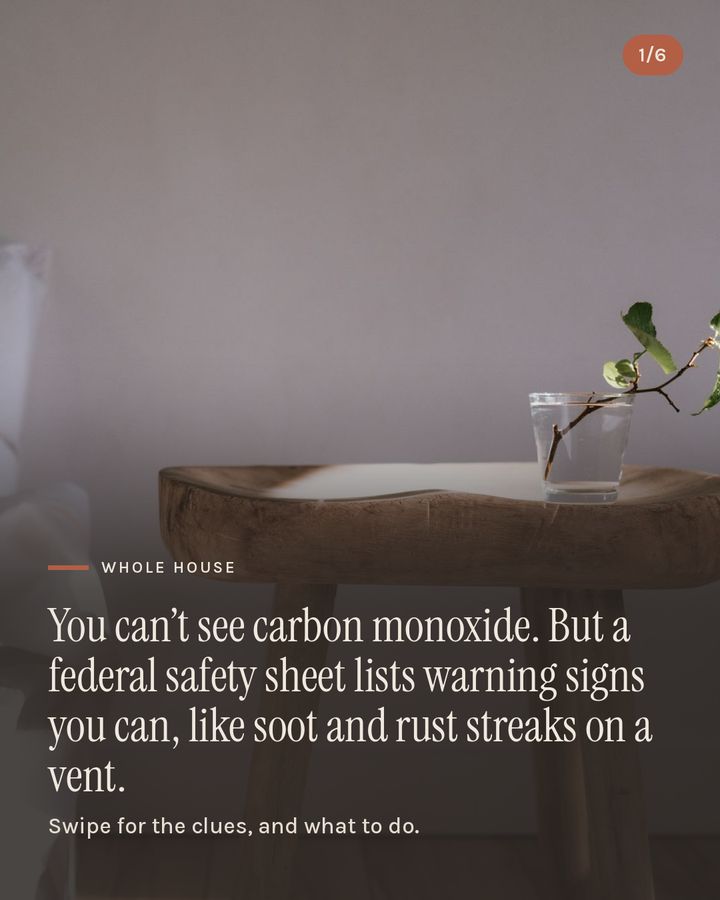
Carbon monoxide comes from burning fuel, so any fuel-burning appliance is a possible source. A U.S. Consumer Product Safety Commission safety sheet notes that appliances in good working order produce little of it. The gas has no color or odor, but the sheet lists clues you can see:
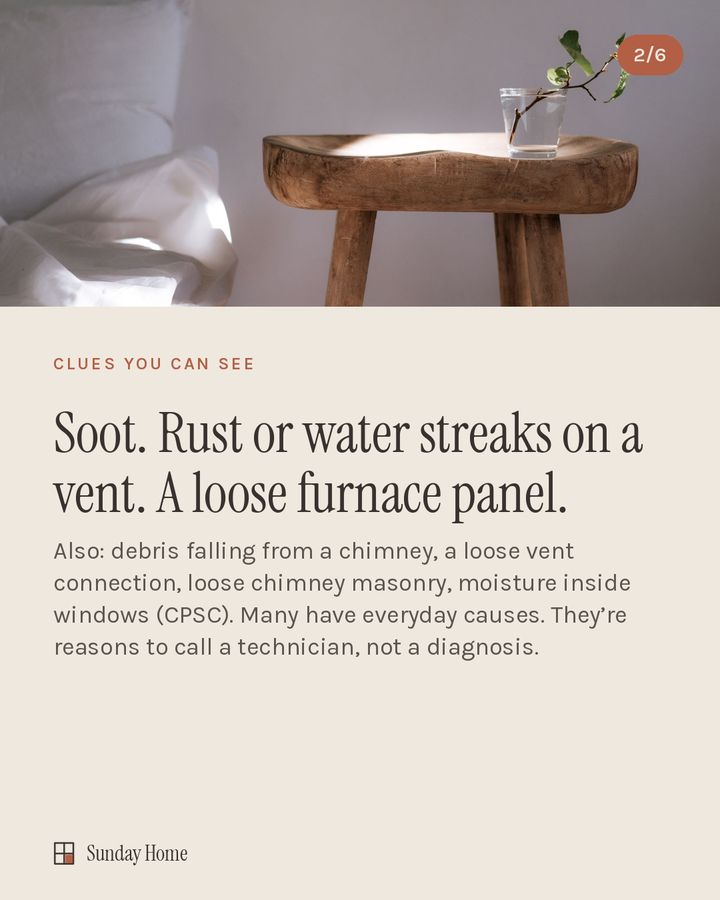
- Rust or water streaks on a vent or chimney
- A loose or missing furnace panel
- Soot, especially on appliances and vents
- Debris or soot falling from a chimney, fireplace or appliance
- A loose or disconnected vent or chimney connection
- Loose masonry on the chimney
- Moisture on the inside of windows
It also lists signs an appliance may not be working properly: less hot water than usual, a furnace that can’t heat the house or runs constantly, and an unfamiliar or burning smell.
Keep this in perspective. Many of these have everyday explanations, and window condensation is common in winter for other reasons. They’re reasons to have a technician look, not a diagnosis. The reverse matters too: CPSC notes some problems can’t be seen at all, like bad burner adjustments or a hidden chimney blockage. Only a trained service technician can find those. One pattern CPSC does list among the unseen clues: symptoms that show up at home and ease or disappear when you’re away.
Where the alarms go. CPSC recommends a CO alarm on every level of the home, outside each sleeping area. EPA’s placement guide adds a central spot on every livable level including the basement, at least 15 feet from any fuel-burning appliance, and near the door to an attached garage.
Never do these, per CPSC: leave a car running in a garage, even with the door open; run a generator in the home, garage or crawlspace (open windows and fans will not prevent CO from building up); use a gas range, oven or dryer to heat the house; line the bottom of a gas oven with foil; or install or service a fuel-burning appliance without the proper knowledge, skills and tools.
Sunday Home
Try this at home
- Do a five-minute walk-around of the furnace, water heater, fireplace and any vents you can see from the floor. Look for the clues above. Don’t open panels or climb onto the roof.
- Test your CO alarms monthly, and follow the manufacturer’s instructions for replacing them.
- Book the annual inspection. CPSC says to have the heating system, including chimneys and vents, inspected and serviced every year by a trained service technician. Anything involving gas lines, burners or venting is a job for a licensed pro.
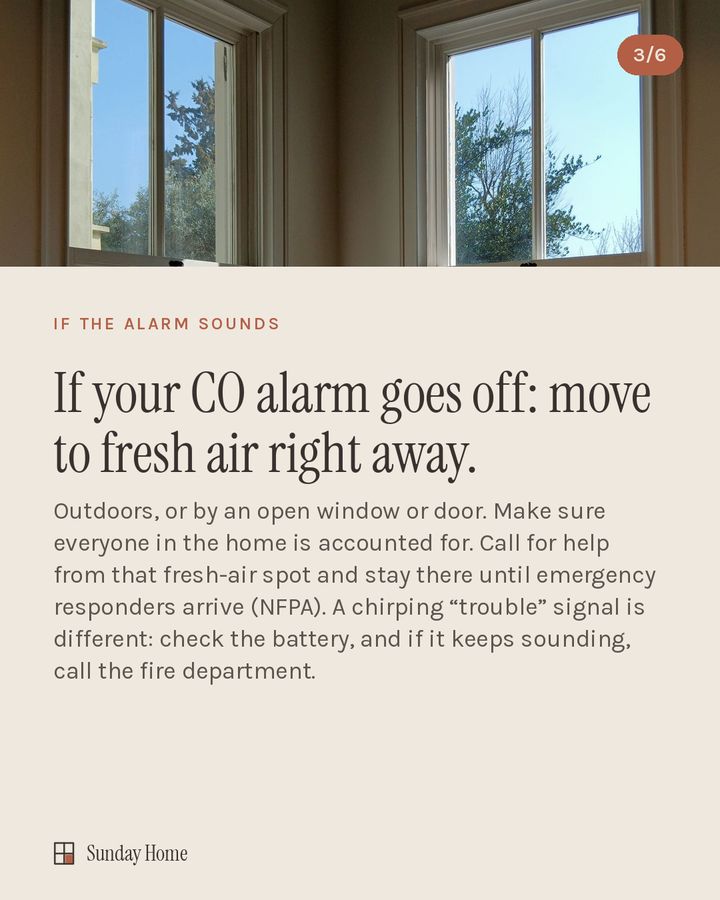
If your CO alarm goes off, the National Fire Protection Association says to move right away to fresh air, outdoors or by an open window or door, make sure everyone in the home is accounted for, and call for help from that fresh-air spot. Stay there until emergency responders arrive. A chirping “trouble” signal is different: check the battery, and if it keeps sounding after a new one, call the fire department.
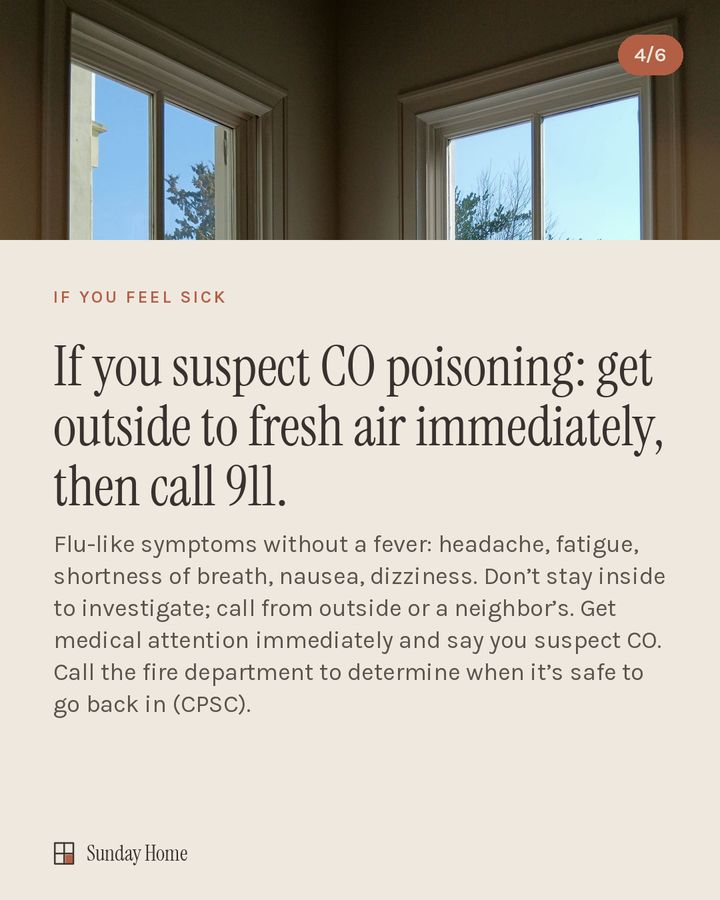
If you suspect CO poisoning (flu-like symptoms without a fever, such as headache, fatigue, shortness of breath, nausea or dizziness), CPSC says: get outside to fresh air immediately, then call 911. Don’t stay inside to investigate. CPSC’s safety sheet warns you could lose consciousness and die if you stay in the home, so make the call from outside or from a neighbor’s. Get medical attention immediately and tell the medical staff you suspect CO. Call the fire department to determine when it’s safe to go back in.
How many CO alarms does your home have, and do you know when you last tested them?
The carousel — scroll sideways
Sources
Everything above is checked against these. Open any of them.
- U.S. Consumer Product Safety Commission, Carbon Monoxide Information Center (“If you suspect CO poisoning, get outside to fresh air immediately, and then call 911”; alarms “on every level of the home and outside sleeping areas”; read via WebFetch, curl is blocked)https://www.cpsc.gov/Safety-Education/Safety-Education-Centers/Carbon-Monoxide-Information-Center
- U.S. Consumer Product Safety Commission, “The ‘Invisible’ Killer” (CPSC-464): visible and invisible clues, signs of improper operation, alarm near bedrooms, annual inspection, warnings, symptoms, what to dohttps://www.cpsc.gov/s3fs-public/464.pdf
- NFPA, Carbon Monoxide safety tips (“If the CO alarm sounds, immediately move to a fresh air location outdoors or by an open window or door. Make sure everyone inside the home is accounted for. Call for help from a fresh air location and stay there until emergency personnel [arrive]”; trouble signal: check battery, “If it still sounds, call the fire department”; read via curl 2026-09-15)https://www.nfpa.org/education-and-research/home-fire-safety/carbon-monoxide
- EPA, Carbon Monoxide’s Impact on Indoor Air Quality (quotes CPSC: CO alarms “on each level outside each sleeping area”; annual professional inspection of fuel-burning appliances)https://www.epa.gov/indoor-air-quality-iaq/carbon-monoxides-impact-indoor-air-quality
- EPA, Carbon Monoxide Alarms infographic (central location on every level including basement; at least 15 feet from any fuel-burning appliance; near or inside each sleeping area; near the door to the attached garage and rooms over the garage; test monthly; follow manufacturer and codes for replacement)https://www.epa.gov/indoor-air-quality-iaq/carbon-monoxide-alarms-protect-your-family-and-yourself-infographic
Next story
 Laundry