Radon doesn’t come from anything you bought. It comes from the ground under the house.
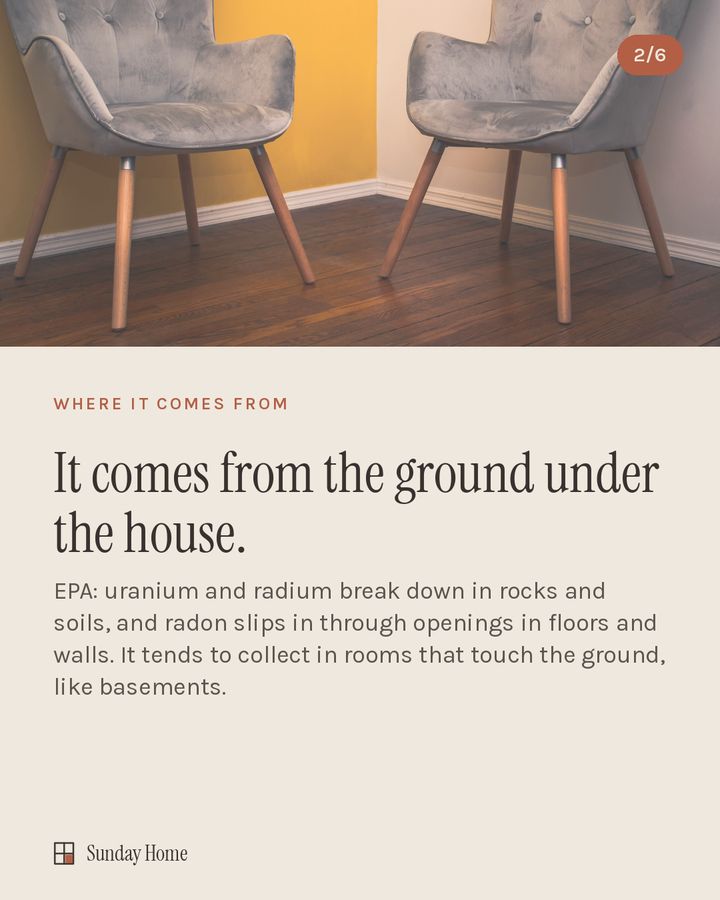
The EPA explains that radon is a natural radioactive gas released as uranium and radium break down in rocks and soils, which contain them almost everywhere. It moves up and slips into buildings through openings in floors and walls. In some areas where people drink groundwater, it can also come in with the water. Because it rises from below, it tends to collect in rooms that touch the ground, like basements.
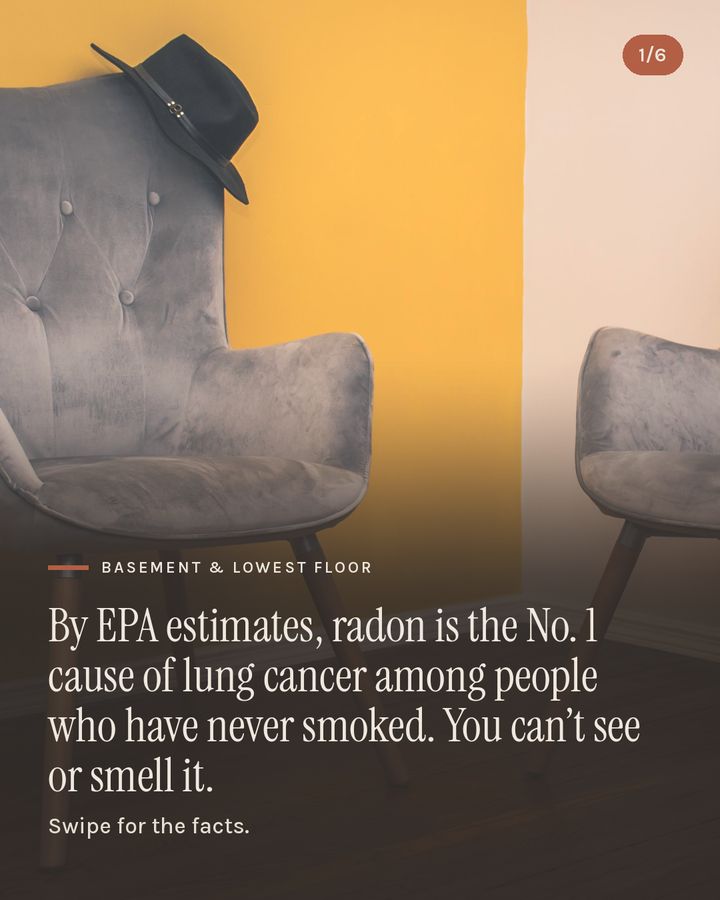
The numbers are EPA estimates, and they’re sobering. Radon is linked to about 21,000 lung cancer deaths a year in the U.S., with an uncertainty range of 8,000 to 45,000. About 2,900 of those deaths are among people who never smoked. Overall, radon ranks second only to smoking as a cause of lung cancer, and EPA says a smoker who is also exposed to radon has a much higher risk.
A few facts from EPA that surprise people:
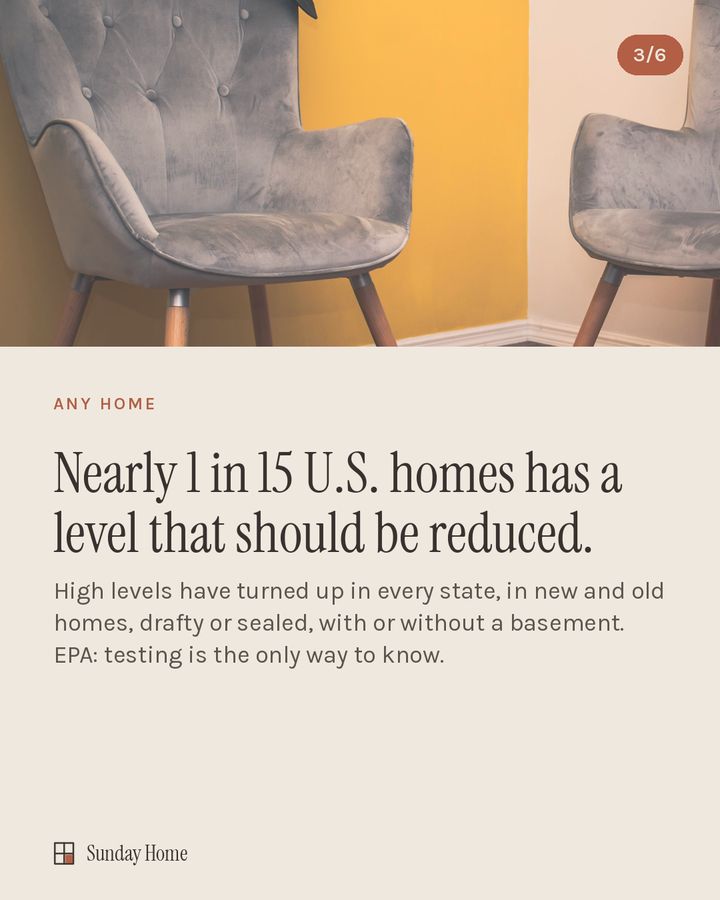
- Nearly 1 in 15 U.S. homes has a radon level that should be reduced.
- High levels have been found in every state.
- New homes and old homes, drafty and well-sealed, with or without a basement: any of them can have high radon.
- Testing is the only way to know, and EPA says to test all homes regardless of where they are.
Radon is measured in picocuries per liter of air (pCi/L). The EPA and the U.S. Surgeon General recommend fixing a home at 4 pCi/L or higher. EPA says to consider fixing between 2 and 4, and notes that levels below 4 still pose some risk.
Sunday Home
Try this at home
The part you can do yourself is the test. The EPA and the U.S. Surgeon General recommend testing all homes.
- Place the test low. EPA says levels are often highest in the lowest part of a home. Its Citizen’s Guide to Radon says to use the lowest level you actually live in: the basement if it’s used often, otherwise the first floor. Pick a room that’s used regularly, not the kitchen or bathroom, at least 20 inches off the floor, away from drafts, high heat, high humidity and exterior walls.
- Follow the kit’s instructions exactly. EPA says a short-term test takes only minutes to set up. For a short test, the guide says to keep windows and outside doors closed as much as possible. You can also hire a certified professional to test.
- Call your state radon program. It can provide a list of certified professionals, and some states offer free test kits.
- Confirm a high result. If a short-term test reads 4 pCi/L or higher, EPA’s guide says to take a follow-up test to be sure: a long-term test, or a second short-term test if you need an answer quickly. If the first result is more than twice 4 pCi/L, take the second short-term test right away.
- Test again after major remodeling or changes to your heating and cooling system.
If testing confirms 4 pCi/L or higher, this is a job for a certified radon mitigation professional. EPA says lowering radon takes technical knowledge and special skills. Reduction systems involve venting and fans built into the house. Don’t design or install one yourself. EPA also advises testing again after the fix.
Have you ever tested your home for radon? Did the number surprise you?
The carousel — scroll sideways

Sources
Everything above is checked against these. Open any of them.
- EPA, Health Risk of Radon (“Radon is the number one cause of lung cancer among non-smokers, according to EPA estimates”; about 21,000 deaths, about 2,900 among never smokers; uncertainty range 8,000 to 45,000; second leading cause; smoking synergy; consider fixing between 2 and 4 pCi/L)https://www.epa.gov/radon/health-risk-radon
- EPA RadTown, Radon in Homes, Schools and Buildings (nearly one in 15 homes; high levels in every state; uranium and radium in rocks and soils; openings in floors and walls; groundwater; basements; any home can have high levels; test all homes; retest after remodeling or HVAC changes; lowest part of home; short-term test minutes to set up, results in a few days; certified professional; action at 4 pCi/L or greater; state radon programs, some free kits; retest after fixing)https://www.epa.gov/radtown/radon-homes-schools-and-buildings
- EPA, *A Citizen’s Guide to Radon* (2016 PDF: test placement in the lowest lived-in level, regularly used room, not kitchen or bathroom, 20 inches up, away from drafts, heat, humidity and exterior walls; close windows for short tests; follow-up test when a short-term result is 4 pCi/L or higher, immediately if more than twice 4; levels below 4 still pose some risk; mitigation “requires technical knowledge and special skills,” use a trained contractor)https://www.epa.gov/sites/default/files/2016-12/documents/2016_a_citizens_guide_to_radon.pdf
Next story
 House Systems