
If you’ve ever lifted a box in the closet and watched something silver dart away, you’ve probably met a silverfish. University of California pest experts describe a creature that’s stranger than it looks.
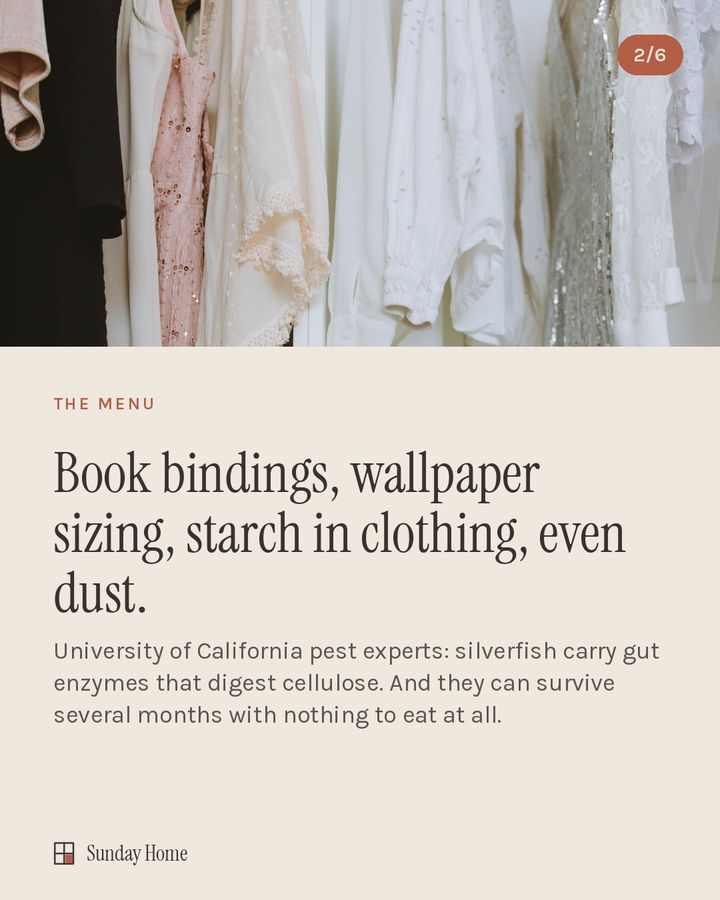
It eats what we think of as inedible. According to UC’s Integrated Pest Management program, silverfish and their look-alike cousins, firebrats, carry gut enzymes that digest cellulose. They go for dry foods like cereal, flour and pet food, but also paper with glue or paste, the sizing in wallpaper, book bindings and starch in clothing. Household dust counts as food too. And they can survive for several months with nothing at all.
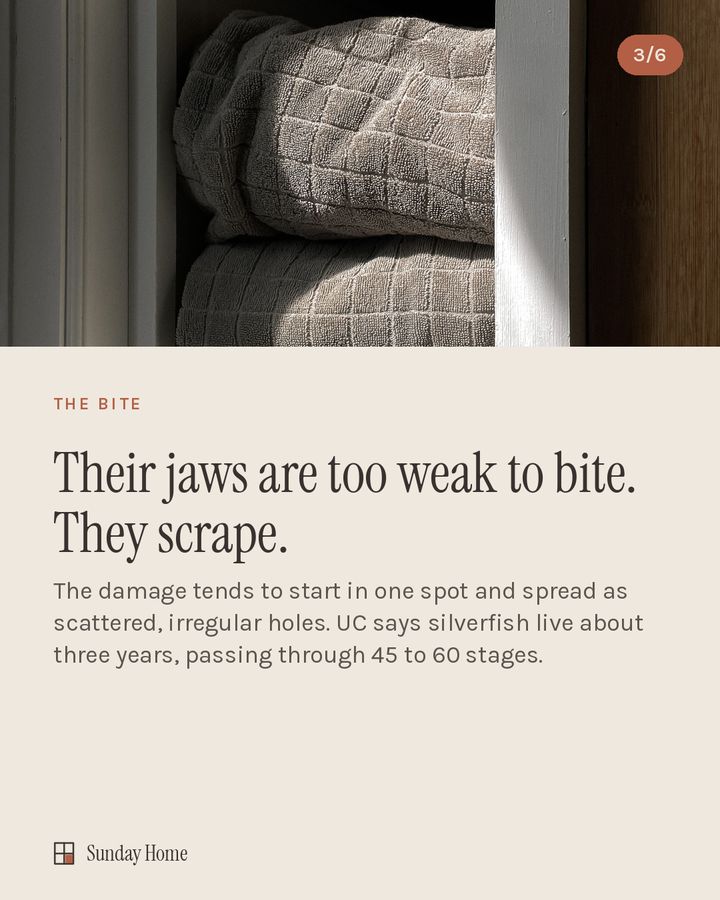
It doesn’t really bite. Their jaws are so weak that they scrape the surface of paper instead. The damage tends to start in one spot and spread as scattered, irregular holes. On pages, their cousins’ grazing can leave gray patches and even missing letters.
It keeps growing up. UC notes that, unlike other insects, silverfish and firebrats molt continuously throughout life, passing through 45 to 60 stages. UC says silverfish live about three years and firebrats about two.
It follows the moisture. Silverfish like damp, warm spots such as laundry rooms, and at higher temperatures they need relative humidity above 75%. Firebrats prefer it hot and dry, near ovens, furnaces and hot water pipes.
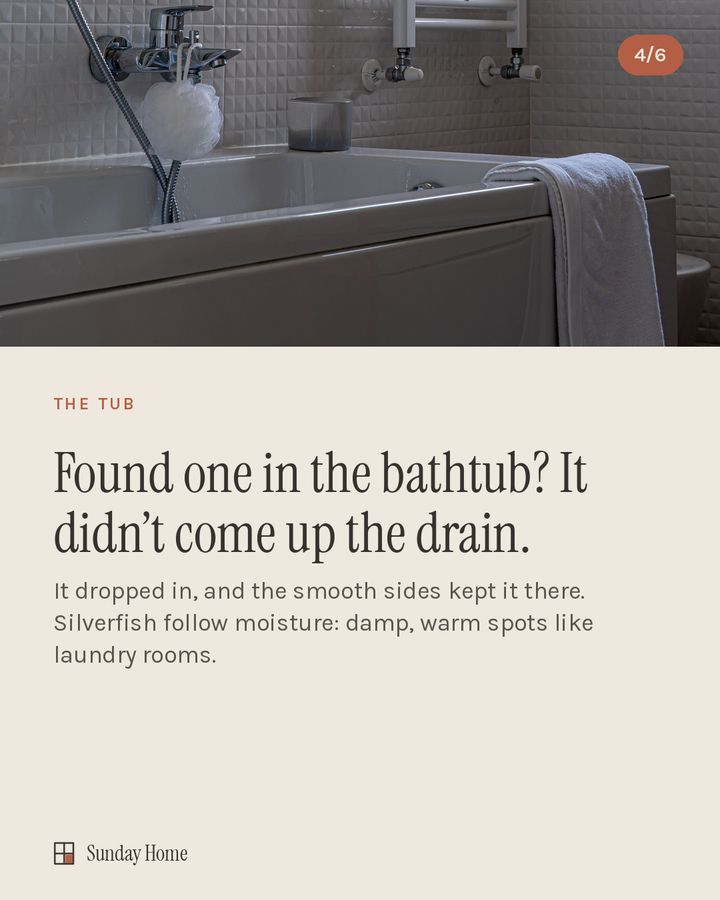
It didn’t come up the drain. Found one in the bathtub? UC explains that it didn’t arrive by pipe. It dropped in, and the smooth walls of the tub kept it there.
One more clue: bigger nymphs and adults carry fine, powdery scales, and those scales cling to most surfaces. UC says finding those scales around or under a damaged item is a good sign of who did it.
Sunday Home
Try this at home
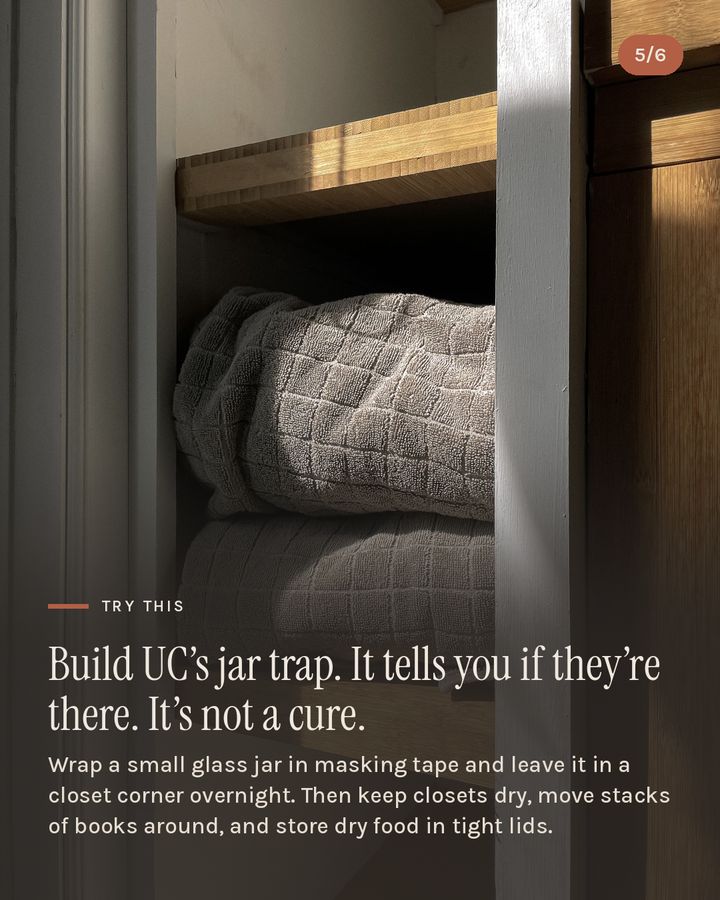
Build UC’s jar trap. It’s a way to find out whether you have them, not a cure. Wrap the outside of a small glass jar with masking tape. Set it in a closet corner or along a shelf edge overnight. The tape gives them a way up, and the smooth glass inside gives them no way out. Check it in the morning.
Then take away what they need:
- Keep closets, basements and laundry rooms dry. UC notes dehumidifiers and fan ventilation make spaces less livable for silverfish.
- Every so often, move stacks of magazines, papers and books around.
- Store dry food in containers with tight lids.
- Fix drips and leaks.
Have you ever found one in the tub? Now you know it fell in. It didn’t climb up the drain.
The carousel — scroll sideways

Sources
Everything above is checked against these. Open any of them.
- University of California IPM, Pest Notes: Silverfish and Firebrats (Pub. 7475)https://ipm.ucanr.edu/PMG/PESTNOTES/pn7475.html
Next story
 House Systems