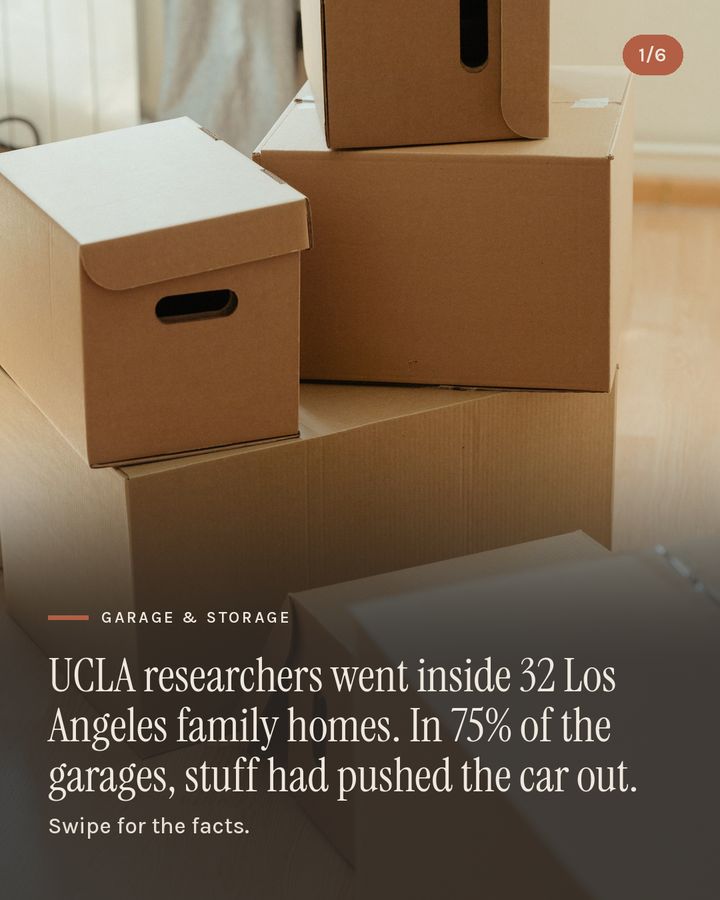
Marketers track almost every purchase, one of the researchers pointed out, but the information stops once the shopping bags come through the front door. A team at UCLA’s Center on Everyday Lives of Families went inside to see what happens next.
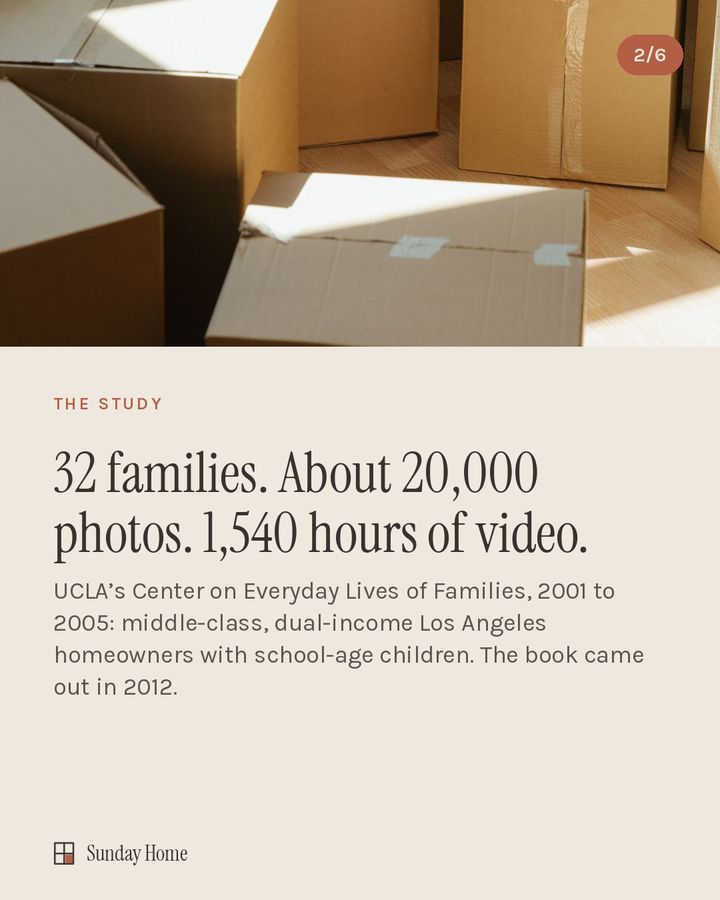
Between 2001 and 2005, archaeologists, anthropologists and other social scientists studied 32 middle-class, dual-income families with school-age children in the Los Angeles area, all homeowners. They photographed nearly everything, around 20,000 photos, and recorded 1,540 hours of video of family interactions and interviews. The center was funded by the Alfred P. Sloan Foundation. The results became a 2012 book, Life at Home in the Twenty-First Century: 32 Families Open Their Doors.
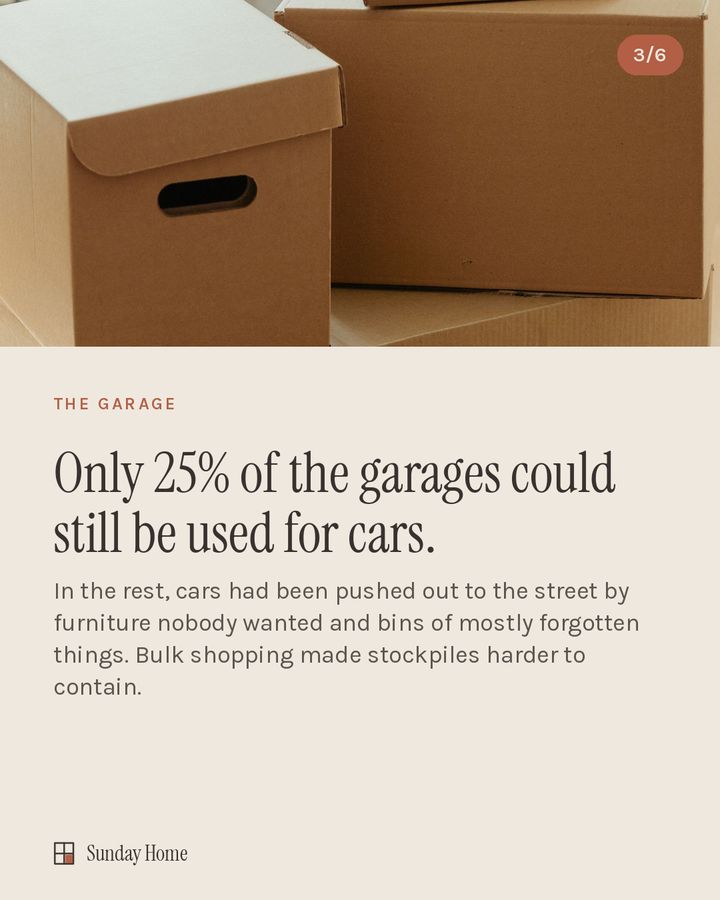
The garage finding is the most quotable. Only 25 percent of the garages could still be used for cars. In the rest, cars had been pushed out to the street to make room for furniture nobody wanted and bins of mostly forgotten things. The researchers also noted that bulk shopping made stockpiles of food and cleaning supplies harder to contain.
A few other details:
- The fridge door as a gauge. The typical refrigerator front held 52 objects. The most crowded had 166. The researchers noticed that families with busier fridge doors tended to have more stuff in their main rooms, too.
- Kids multiply things. The researchers’ data suggested a household’s belongings grew about 30 percent with each new child, and that was just while the kids were preschoolers.
- Shortcuts that weren’t. Most families leaned on convenience foods, but saved only about 10 to 12 minutes per meal.
- Who felt the mess. Researchers found a link between how mothers described cluttered homes and their levels of the stress hormone cortisol. Fathers walking through the same rooms often didn’t mention the mess at all.
Keep the limits in mind. This was 32 families in one metro area in the early 2000s, and the cortisol finding is a link, not proof that clutter causes stress. Still, it’s a rare look at what actually fills American houses.
Sunday Home
Try this at home
Do the fridge count. Tonight, count every object on your refrigerator door: magnets, photos, schedules, takeout menus. Compare with the study’s typical 52.
Then walk into the garage and pick one shelf or one corner. Anything you haven’t touched since last year gets a decision this weekend: keep, donate or toss.
Honest answer: does your car actually fit in your garage?
The carousel — scroll sideways
Sources
Everything above is checked against these. Open any of them.
- UCLA Magazine / UCLA Newsroom, “The Clutter Culture” (cars banished from 75 percent of garages; fridge front 52 objects, most crowded 166; fridge density corresponds to main-room densities; each new child 30 percent more possessions in preschool years; 2001–05 study; ~20,000 photos, 1,540 hours of video; cortisol, fathers unaffected)https://newsroom.ucla.edu/magazine/center-everyday-lives-families-suburban-america
- University of California press release, “Book documents cluttered paradise of middle class” (32 middle-class dual-income LA families; Sloan Foundation funding; only 25 percent of garages could be used to store cars; big-box stockpiling; convenience foods saved 10 to 12 minutes per meal)https://www.universityofcalifornia.edu/press-room/book-documents-cluttered-paradise-middle-class
Next story
 Closet & Storage