
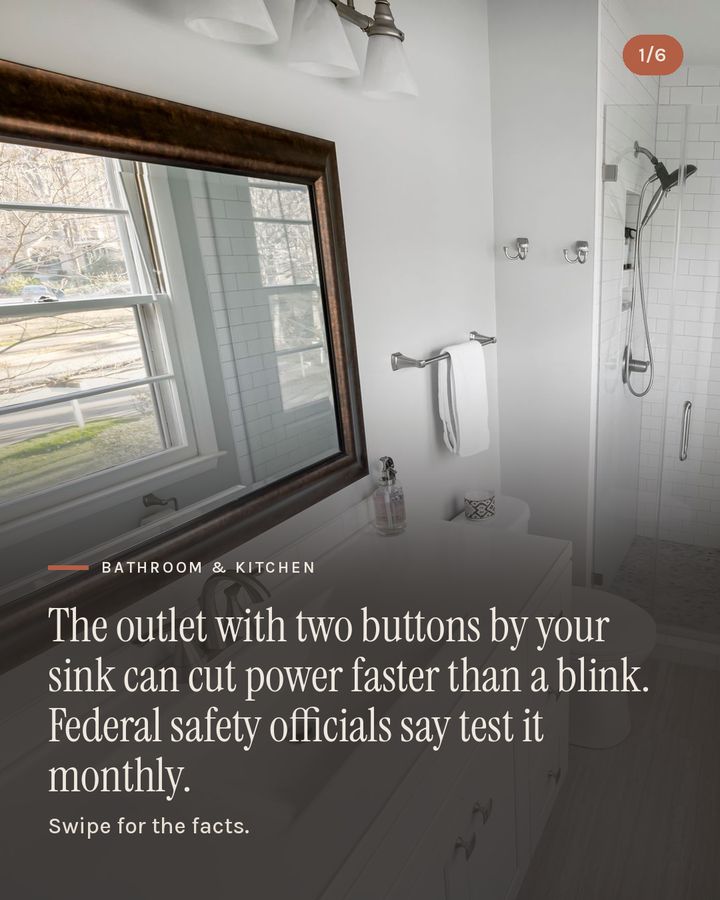
Look at the outlet next to your bathroom sink. If it has two small buttons marked TEST and RESET, it’s a GFCI: a ground fault circuit interrupter.
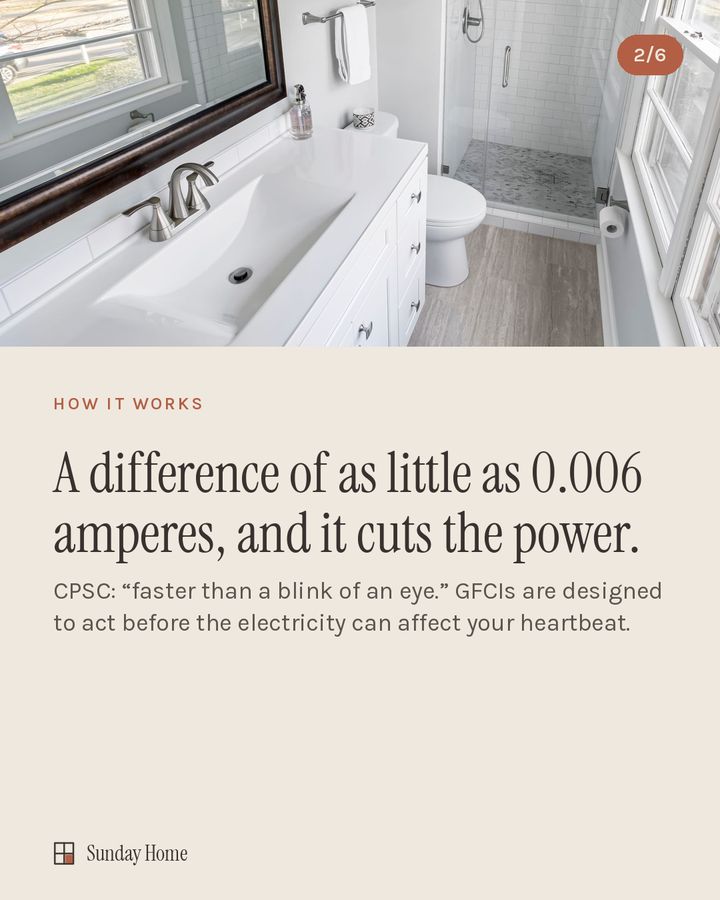
It’s one of the quietest safety devices in the house. According to the U.S. Consumer Product Safety Commission, a GFCI constantly compares the electricity flowing out through a circuit with the electricity coming back. If the two differ by as little as 0.006 amperes, meaning some current is leaking somewhere it shouldn’t, like through a person, it cuts the power “faster than a blink of an eye.” CPSC says GFCIs are designed to act before the electricity can affect your heartbeat.
Where you find them isn’t random. It’s a timeline. The National Electrical Code added GFCI requirements room by room, CPSC notes:
- Outdoor outlets: 1973
- Bathrooms: 1975
- Garages: 1978
- Kitchens: 1987
- Crawl spaces and unfinished basements: 1990
- Wet bar sinks: 1993
- Laundry and utility sinks: 2005
The code typically applies to new construction and major renovations. So in an older home, the outlet by the kitchen sink may be exactly as old as the kitchen, and not GFCI-protected at all. (An outlet without buttons can still be protected by a GFCI elsewhere on the circuit or at the panel, which is one more reason to let an electrician check.)
Here’s the part almost nobody does. CPSC says to test every GFCI at least once a month, after a power failure, and according to the manufacturer’s instructions.
Sunday Home
Try this at home
Follow the instructions that came with your GFCI if you have them. If not, here’s CPSC’s test:
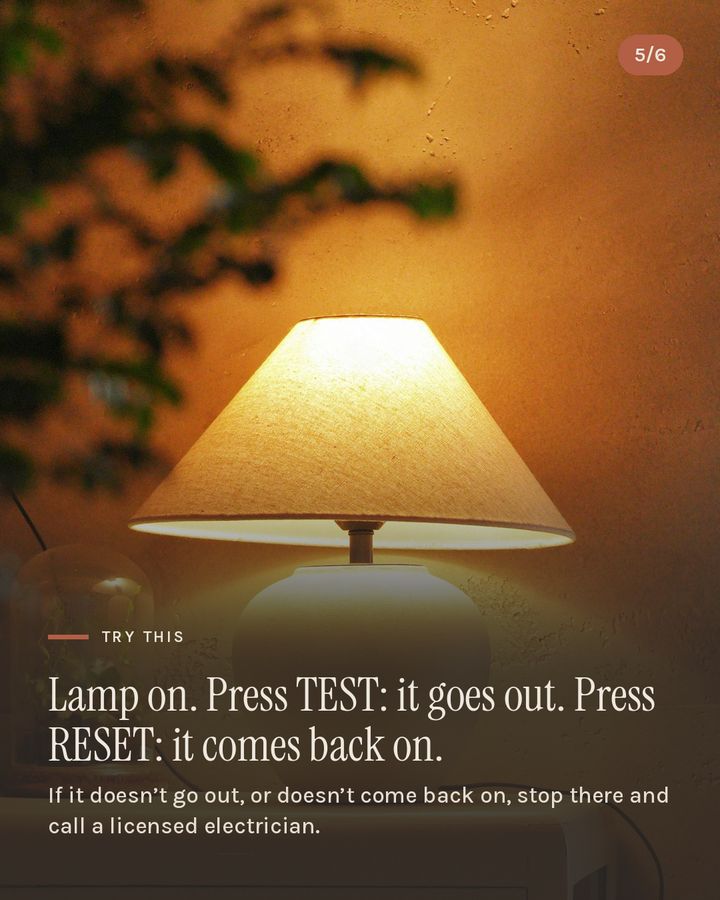
- Plug a lamp into the outlet and turn it on.
- Press TEST. The lamp should go out.
- Press RESET. The lamp should come back on.
If the lamp doesn’t go out when you press TEST, the GFCI isn’t working or wasn’t installed correctly. If it doesn’t come back on after RESET, CPSC says the GFCI needs replacing. In either case, stop there and call a licensed electrician. Opening outlets, replacing GFCIs and anything at the breaker panel are jobs for a pro. And if the kitchen, bathroom or outdoor outlets in an older home have no GFCI protection at all, that’s worth a conversation with an electrician too.
Pick one easy date, like the first of the month, and test them all.
Go press one now. Did the light go out?
The carousel — scroll sideways



Sources
Everything above is checked against these. Open any of them.
- U.S. Consumer Product Safety Commission, Fact Sheet “What Is a GFCI?” (Pub. 099; 0.006 amperes, “faster than a blink of an eye,” before it can affect heartbeat, NEC dates, test monthly/after power failure, lamp test procedure, contact a qualified electrician)https://www.cpsc.gov/s3fs-public/099_0.pdf
Next story
 House Systems