
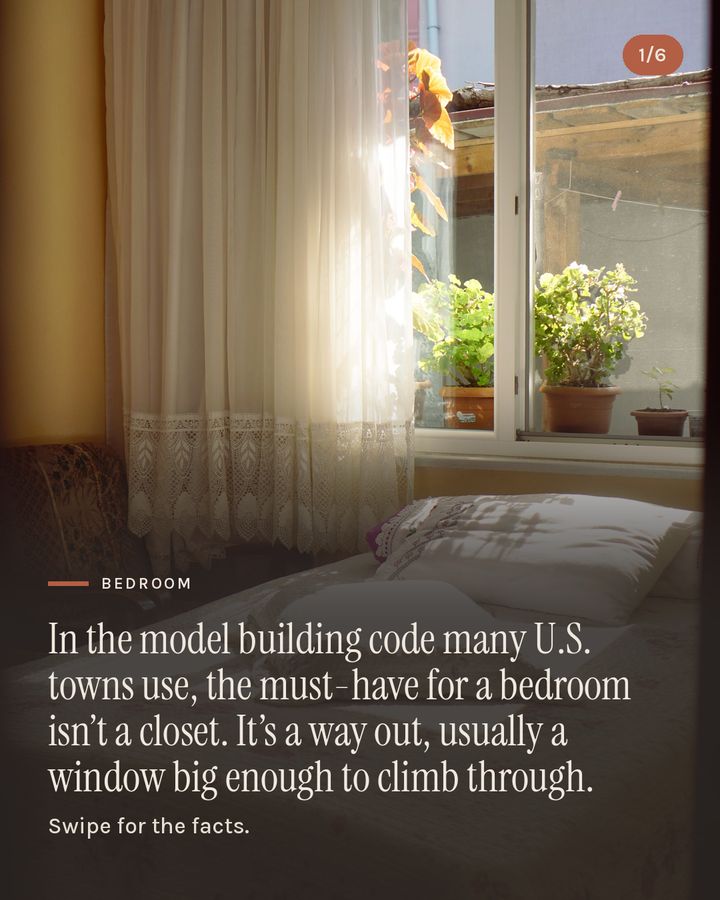
Ask most people what makes a room a bedroom and they’ll say a closet. But in the International Residential Code, a model code that many U.S. communities adopt, the line that really matters is about escape.
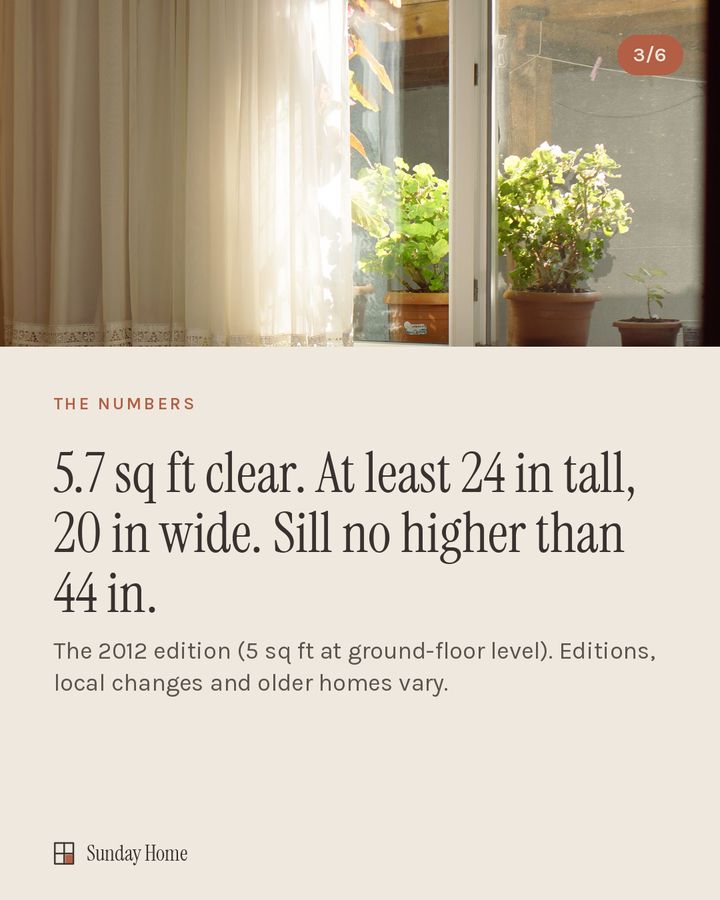
Section R310 says every sleeping room needs at least one “emergency escape and rescue opening,” usually a window, that actually opens. In the 2012 edition, that opening had to provide at least 5.7 square feet of clear space (5 square feet at ground-floor level), be at least 24 inches tall and 20 inches wide, and have a sill no higher than 44 inches off the floor. Put simply, it’s an opening a person can actually climb through.
A few honest caveats. Cities and states adopt different editions of the code with their own changes, newer editions add some exceptions, and older homes may have been built before the rule applied. So your bedroom may or may not match those numbers. The idea behind it is still worth borrowing.
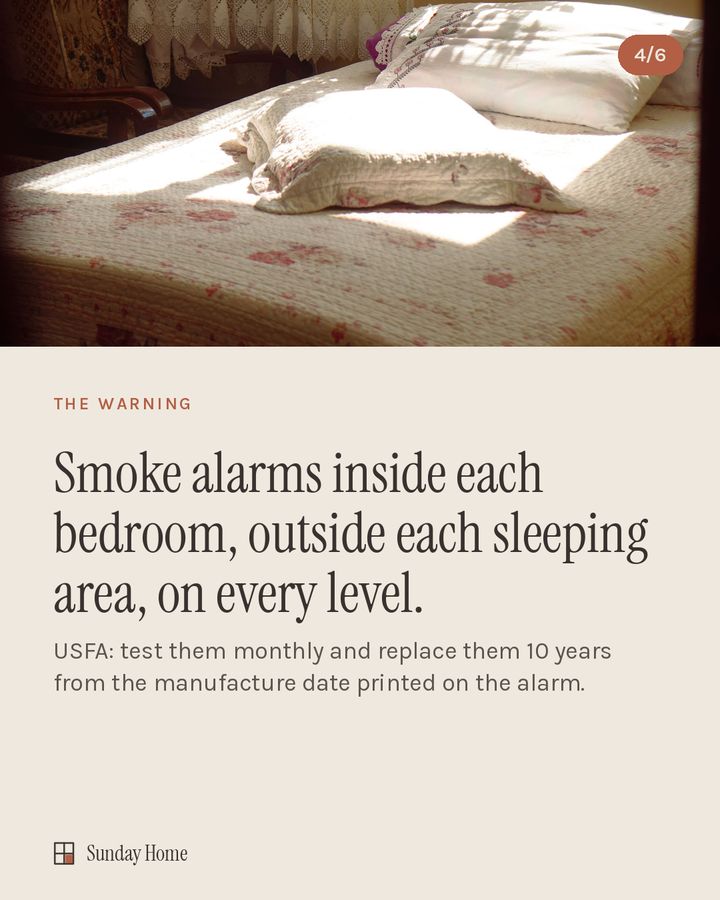
The other half of the plan is warning. The U.S. Fire Administration recommends smoke alarms inside each bedroom and outside each sleeping area, plus one on every level of the home. USFA says to test them monthly, and to replace the whole alarm every 10 years. That 10 years counts from the manufacture date, which is printed on the alarm, often on the back. The agency’s sobering reminder is that once an alarm sounds, you may have less than two minutes to get everyone out.
A window that’s painted shut, blocked by a dresser, or too stiff to open in a hurry quietly defeats the whole design.
Sunday Home
Try this at home
A five-minute bedroom check:
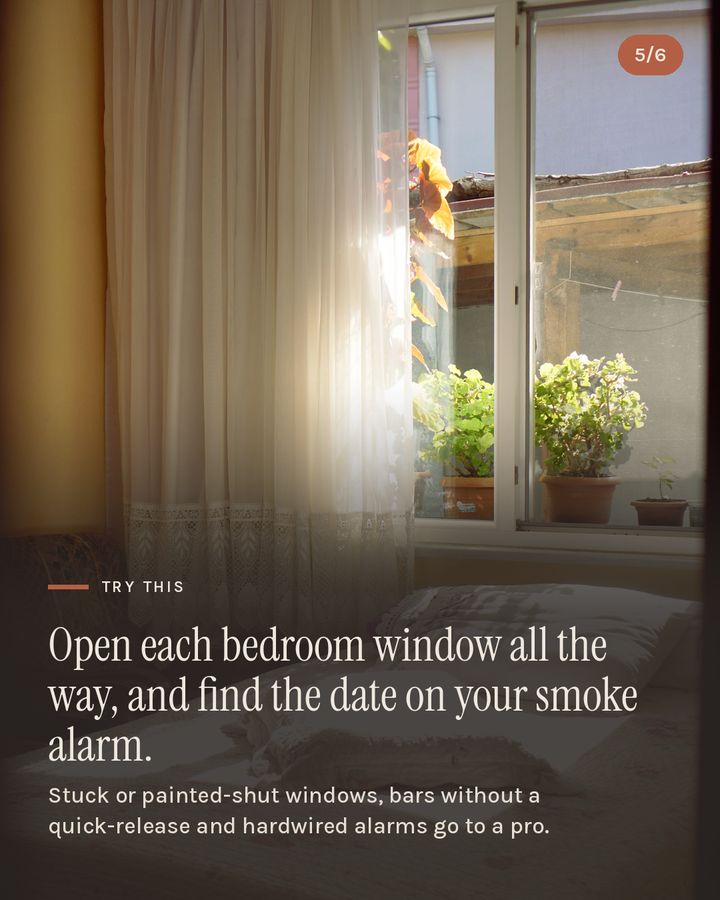
- Open each bedroom window all the way. If it sticks, is painted shut, or has bars without a quick-release, make a note. Anything beyond clearing furniture away is a job for a pro.
- Move anything heavy that stands in front of it.
- Take down one smoke alarm, or read it from a step stool, and find the date on the back. If it’s more than 10 years old, it’s due to be replaced. Hardwired alarms go to an electrician.
- Press the test button.
Go look: what year is printed on the back of your oldest smoke alarm?
The carousel — scroll sideways
Sources
Everything above is checked against these. Open any of them.
- International Residential Code (2012) R310, “Emergency Escape and Rescue Required,” as adopted in the South Holland Residential Code 2012 and published on UpCodeshttps://up.codes/s/emergency-escape-and-rescue-required
- U.S. Fire Administration, Smoke Alarmshttps://www.usfa.fema.gov/prevention/home-fires/prepare-for-fire/smoke-alarms/
Next story
 Living Room