
The laundry room is the least glamorous room in the house, and it may hold the appliance that most needs a little attention.
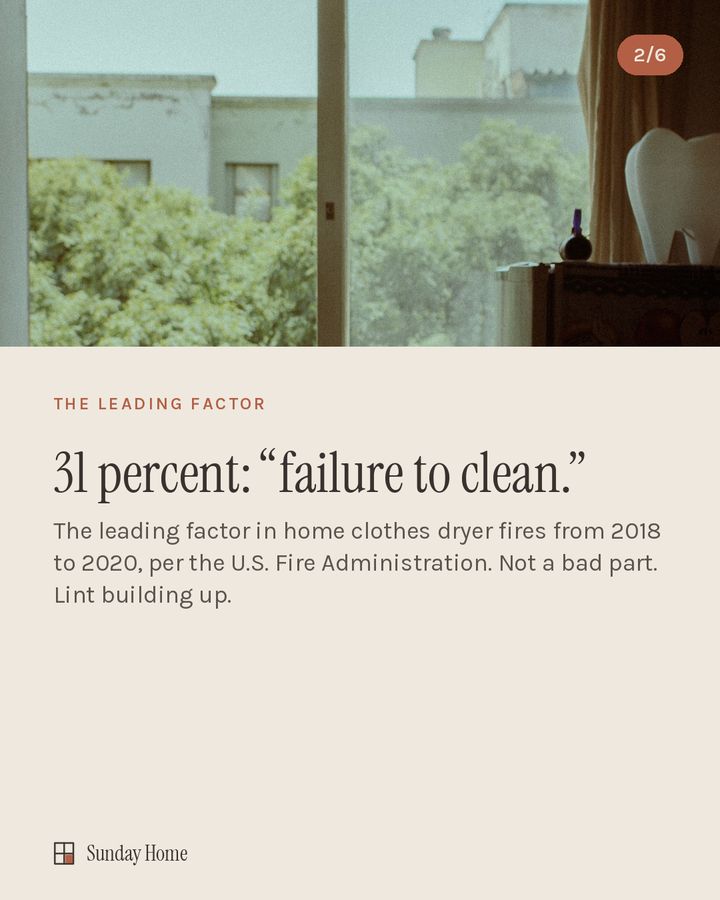
The U.S. Fire Administration tracks what starts home fires. For clothes dryers from 2018 to 2020, the leading factor was “failure to clean,” at 31 percent. That wasn’t a bad part or a wiring defect. It was lint building up.
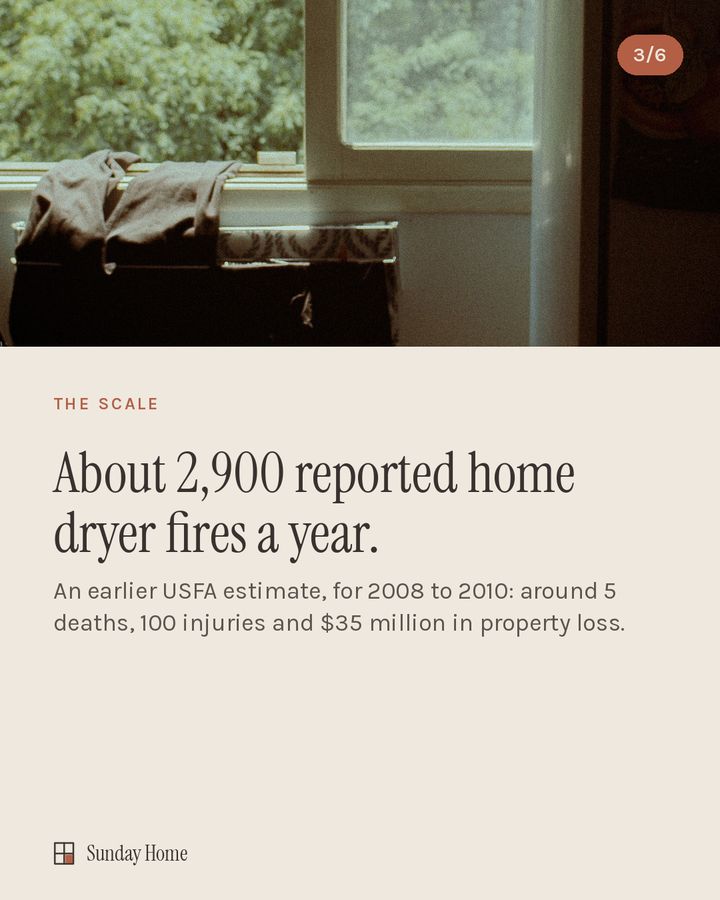
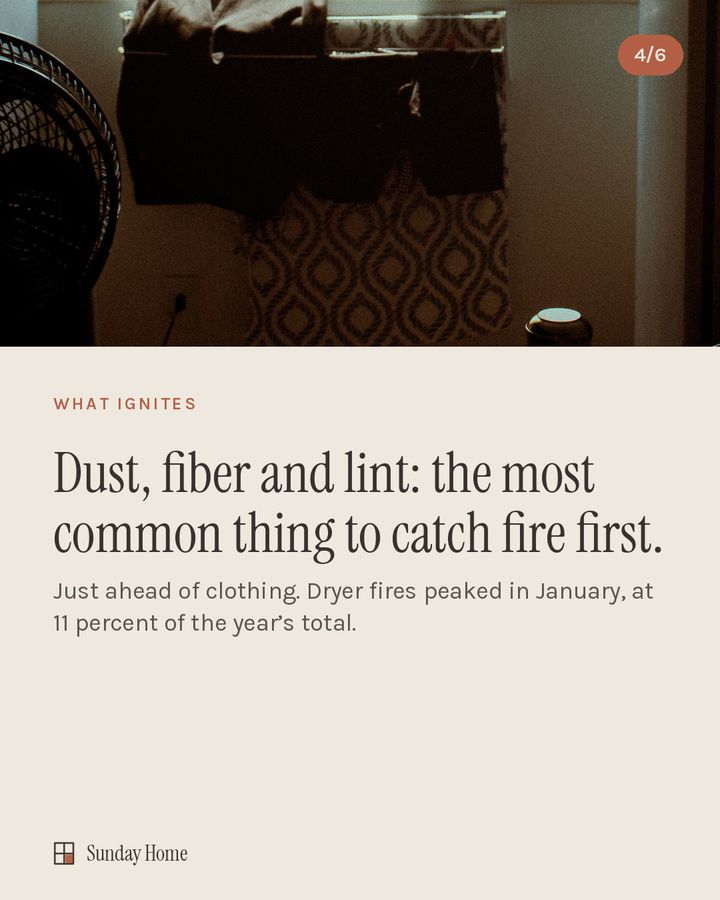
An earlier USFA report, covering 2008 to 2010, filled in the picture. It estimated about 2,900 reported dryer fires in homes each year, causing around 5 deaths, 100 injuries and $35 million in property loss. The most common thing to catch fire first was dust, fiber and lint, just ahead of clothing. Dryer fires also peaked in January, at 11 percent of the year’s total.
Why is lint such a problem? A dryer is basically a hot box moving a lot of air. By that report’s estimate, a full load of wet laundry may carry up to a gallon and a half of water, and all of it has to be driven out as moist, lint-carrying air. Whatever the screen misses ends up in the duct and the vent, and it can quietly pile up there for years.
This isn’t meant to make you afraid of doing laundry. It’s one of the rare fire risks where the fix is mostly a habit.
Sunday Home
Try this at home
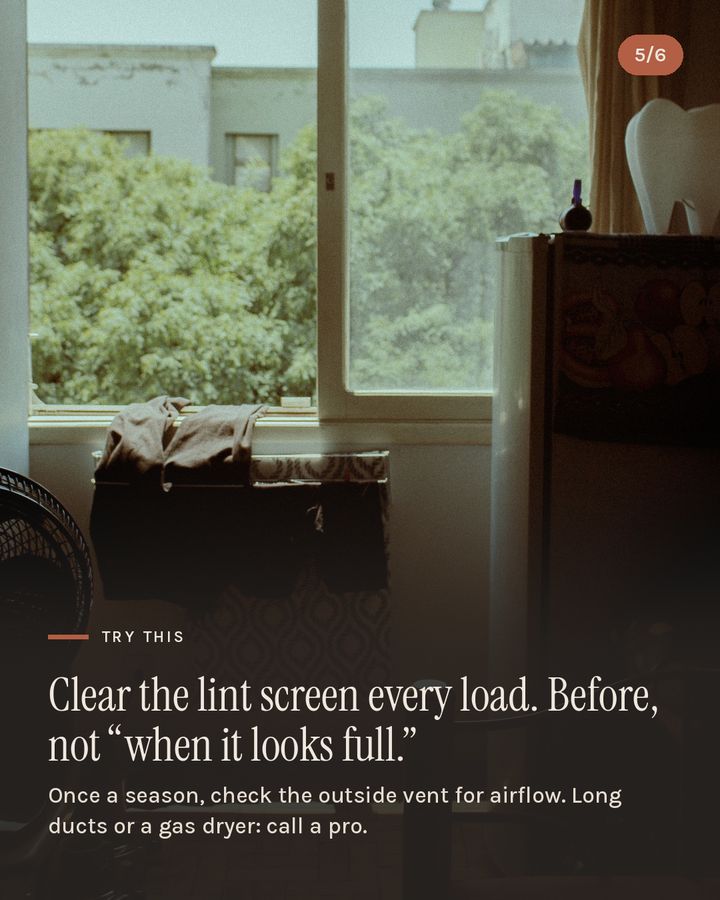
- Every load: pull out the lint screen and clear it. Before, not “when it looks full.”
- Once a season: with the dryer running, step outside and find the vent hood. You should feel air coming out and see the flap open. If the air is weak, or clothes are taking longer to dry than they used to, the duct may be clogged.
- Call a pro if the duct runs a long way through walls or the attic, or if you have a gas dryer. Don’t take apart gas connections yourself.
Honest poll: do you clean the lint screen every single load, most loads, or “when I remember”?
The carousel — scroll sideways

Sources
Everything above is checked against these. Open any of them.
- U.S. Fire Administration, “Appliance and Electrical Fire Safety” (failure to clean, 31%, 2018–2020)https://www.usfa.fema.gov/prevention/home-fires/prevent-fires/appliance-and-electrical/
- U.S. Fire Administration, Topical Fire Report “Clothes Dryer Fires in Residential Buildings (2008–2010)”https://www.usfa.fema.gov/downloads/pdf/statistics/v13i7.pdf
Next story
 Bathroom